
Except the rain
On falling in love, twice, in one wet summer in London
When I was eighteen, I fell in love with a girl from Catalonia. It was June in London, and I was away from home for the first time—away from my family, my podunk desert town, my friends, everyone who knew me.
It was a freedom I didn’t know I was allowed to want. And in the terrifying, exhilarating void of independence, desire sprang fully formed, like a rock that had been waiting its whole life to tell me it was a statue.
Her name was Clara. She had wild, curly blonde hair, dark roots, and green eyes. I knew almost nothing about her. Her English was rudimentary; my Spanish was worse. We were—I think—attending the same college that summer. What was she studying? I don’t know. I was studying poetry. Ted Hughes and Carol Ann Duffy and Shakespeare, their jaguars and onions and mad kings.
It rained almost every day that June. I’d grown up with the drunk promises of desert monsoons, but I didn’t know rain could be like this. Sometimes it arrived as a sneezy drizzle, then suddenly—buckets. It didn’t refresh or exhilarate; it drowned you. The rain appeared and disappeared at random, the buckets fierce and indiscriminating.
If you were patient—if you waited under awnings or in subway station exits—you could remain mostly dry. But I was eighteen and never patient. I spent my days soaked, my cheap shoes squelching against the puddled sidewalks. I didn’t even carry an umbrella.
Clara’s stint at the college must have ended before mine, but she didn’t go home. She moved into our little apartment—the one I shared with four other Americans and a Catalonian boy. Clara slept on the floor just across from my room, three feet away. We went to pubs, stayed up late, drank too many snakebites, and bungled through conversations. I told her I wanted to be a writer. She told me she loved Agatha Christie. She had a boyfriend back in Spain.
I had never been attracted to a woman before—at least not consciously—and yet the sound of her deep voice, the sight of her smoking a cigarette in a loose, lime-green sweater that slipped off her shoulder, revealing the tanned dip of her collarbone—shocked me into such a state of arousal I could barely remain upright in her presence.
I needed to be constantly moving around her: drinking, shifting my weight from foot to foot, adjusting my glasses, peppering her with questions about her boyfriend, afraid that if I stopped I would implode—or worse, try to kiss her.
Nothing happened between us. She hugged me once, before flying back to Catalonia. I have one photograph—somewhere—in an album I never look at.
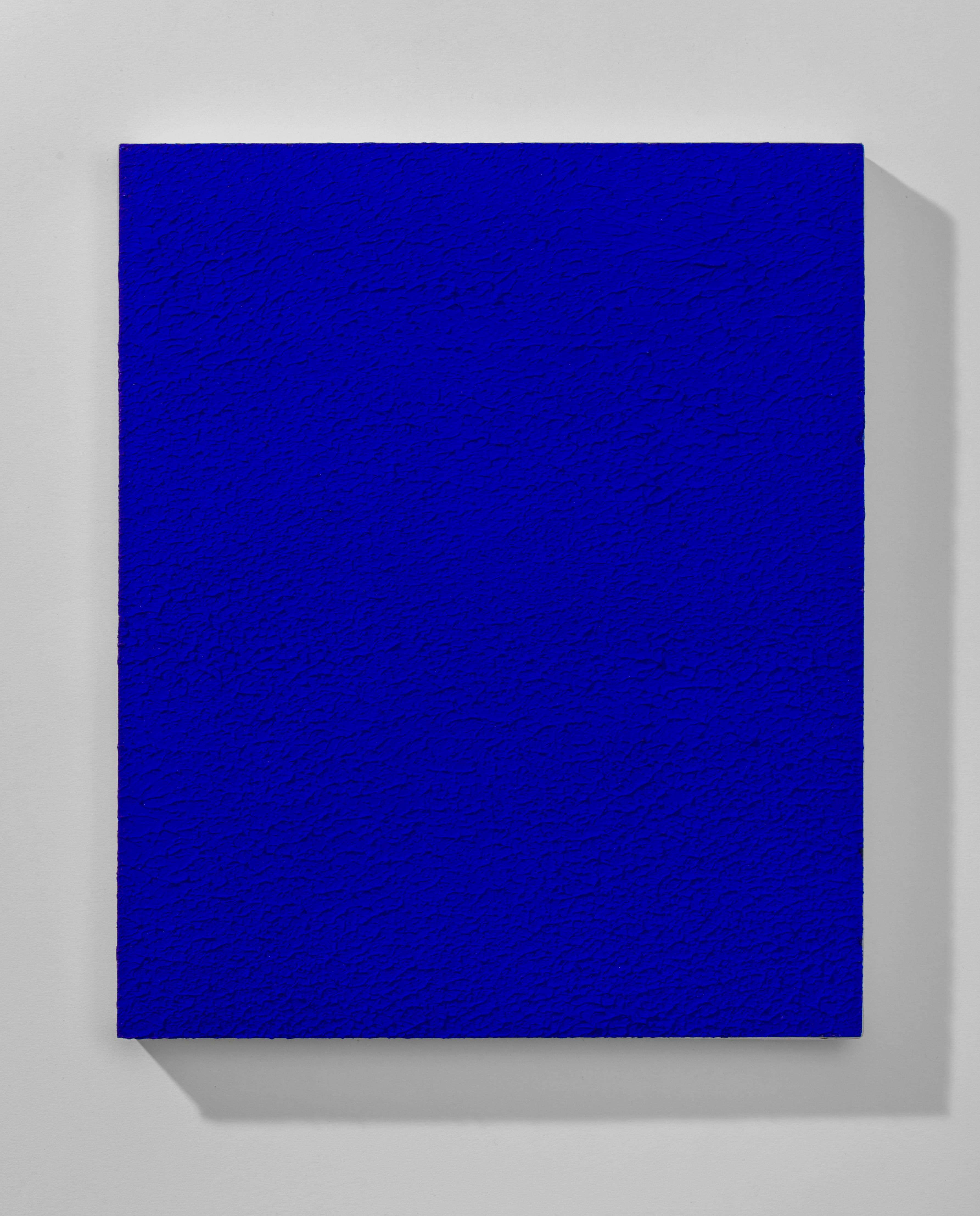
To quell my maddening desire for Clara, another American and I started going to art museums. At the Tate Modern, we saw Marcel Duchamp’s Fountain—the overturned urinal he declared art. We saw Mark Rothko’s monochromes, Yves Klein’s blue paintings, and An Oak Tree—a glass of water set on a shelf eight feet in the air, which the artist claimed was an oak tree.
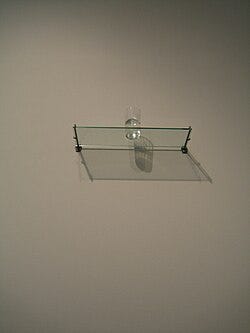
We talked about art, about merit, about who gets to decide what’s beautiful and worthy.
She loved Duchamp, thought his work was revolutionary. I thought it was garbage (quite literally). We argued for hours on a park bench while the rain drenched us, dripping from our hair, and I practically vibrated listening to her make her case—so sure of herself, so sure of her convictions. That sharp Roman nose, nostrils dilating. Eyes darkening like storm clouds. That dusting of freckles on her cheeks, like an afterthought, a cake.
Her name was so close to Clara’s I only had to change one letter—a fact I’m only now noticing. How similar they were. How different.
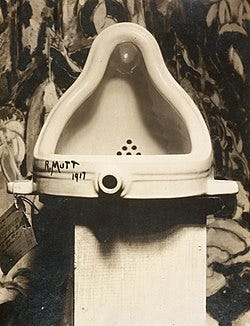
You might not be surprised to learn that I fell in love with her while arguing about a urinal on a park bench in the rain.
Was it the wet? The summer? The memory of Clara? Youth? Freedom? The sky stayed gray nearly the whole season. It felt unending, like my desire—though maybe that’s just memory. A yearning for Klein’s electric blues, for a name to put to my longing, which I scarcely recognized and didn’t admit to anyone for almost a year.
Except her.
She was the first girl I ever kissed. She was combative and brilliant. She said yes to everything, collapsing so easily the divide between impulse and action that the boundary scarcely seemed to exist.
We were up late once, eating doughy white bread smothered with Nutella in our little shared kitchen, and she said, I want to see the ocean. Let’s go to Brighton—and then we did.
It took years, but we finally acted on the passions we once articulated so effortlessly about art—this time with our bodies. She always had boyfriends, and eventually a husband. Nothing came of us, of it, though we still text occasionally, all these years later. She bought me brunch after my dad died. She crocheted me a grumpy snowman that I take out of an ornament box and display every December. My wife and step-kids love it.
I never heard from Clara again, though I can still see her bare shoulder, the hollows of her cheeks as she drew cigarette after cigarette towards her mouth. My youth is gone too, and so are Rothko and Klein and Duchamp—though their art lives on, infuriating or brilliant, depending on who you ask, and regardless will outlast the lot of us. I’ve come around on Duchamp, by the way. But not An Oak Tree. That shit is nonsense.
Things change and don’t. People change and don’t. The peach trees are blossoming pink, in defiance of a cold snap that has wandered in like an old man who’s lost his wallet. My new favorite coffee shop serves pistachio cakes drenched in puddles of cream, bright green and intoxicating as summer.
I’m a thousand miles and a thousand weeks away from that time in London, from the awakening that changed my life in ways I could never change back, even though on the surface—the surface of that warm, wet, interminable season—nothing much happened.
Except the rain.
Is there room on that hill for one more?
My favorite line: "...desire sprang fully formed, like a rock that had been waiting its whole life to tell me it was a statue."
The rock is desire unacknowledged. But when you accept it, embrace it, it turns into a statue.
Your story reminded me of a song, 'London In The Rain' by Variety Lab.
I, admittedly, don’t know much about art but I’m with you regarding An Oak Tree. I’ll die on that hill with you! This piece gave me a sense of nostalgic melancholy if that makes sense? I enjoyed it!